
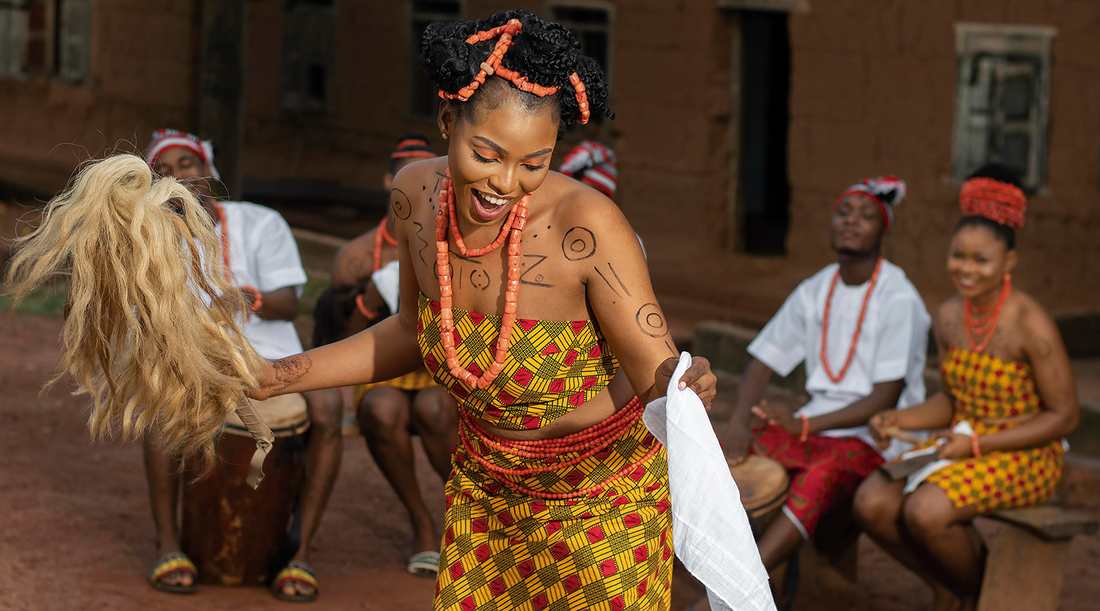
Dance: a powerful cultural expression - The hot rhythms of Angola
There are many symbols that represent liberty, some more similar to each other than others and varying from culture to culture. Think of the red carnation in Portugal, the Liberty Leading the People painting in France and the Statue of Liberty in the United States.

These are static objects that not even time could forget. But in other countries, the representation of freedom goes beyond the tangible. In Angola, the symbols of liberty possess rhythm and melody. Through body language, Angola expresses utopia, pain and sorrow, struggles and conquests. Using undulating movements, it represents the strength of the zungueira woman, the joy of children with their cars made of tin and the family atmosphere of a table filled with dried fish and cassava. These expressions give rise to narratives that have no need of plots, satires that don’t need words, lessons with no need for dialogue. They are felt on every corner and in every street. They have no place, time or social stratum. They don’t exclude genders or styles. Whether in the form of semba, kizomba or afrohouse, dance is a boundless ancient heritage that honours freedom, history, culture and tradition.

From Monday to Sunday, Luanda is awash with colours and lights to the sound of Afro-Latin rhythms. The balmy evenings of the capital are a reason to embrace culture and glide around the dance floor in pairs or on your own. Many people learn to get into the groove and unwind from worldly problems on the streets. Dancing in the musseques has become the buzz word all over the world for the positive and radiant energies it channels. This is the context in which we get to know the Fenómenos do Semba dance group. Let’s imagine the following: with a plate of food in the hand and an Angolan dance routine in the mix, a group creates a choreography that soon goes viral on social media and gets the world moving in the middle of a pandemic. In fact, this is what happened in 2020.

In the space of two days, the Fenómenos do Semba amassed two million views with the choreography they dedicated to the Jerusalema song, and the name spread around the world. Few could get the tune out of their heads, the rhythm that made them unconsciously tap their feet so often. Today, the dance group, made up of 13 members, has racked up other international successes, using the digital realm as a direct gateway to the outside world. The troupe has been around for nine years, committed to publicising Angolan culture, although they still believe that the state does not support artists enough. But nothing gets them down. With sweat on their faces, poses and rhythms between steps that define a style, determination in their eyes and smiles on their faces, they are carving out a solid path that ends up being a reflection of many of the country’s other artistic groups. What is certain is that significant steps are being taken towards the promotion of Angolan culture, as can be seen in kizomba, which was recently recognised as an Intangible Cultural Heritage of the nation.
Anyone who dances in Angola can’t unlearn it. Anyone who feels doesn’t forget it. That’s one of charms of this warm land.
Text: Joana Rebelo
Photography: Rights Reserved / Edson Azevedo