
Museum of Tomorrow - Sustainability in Calatrava’s visionary architecture
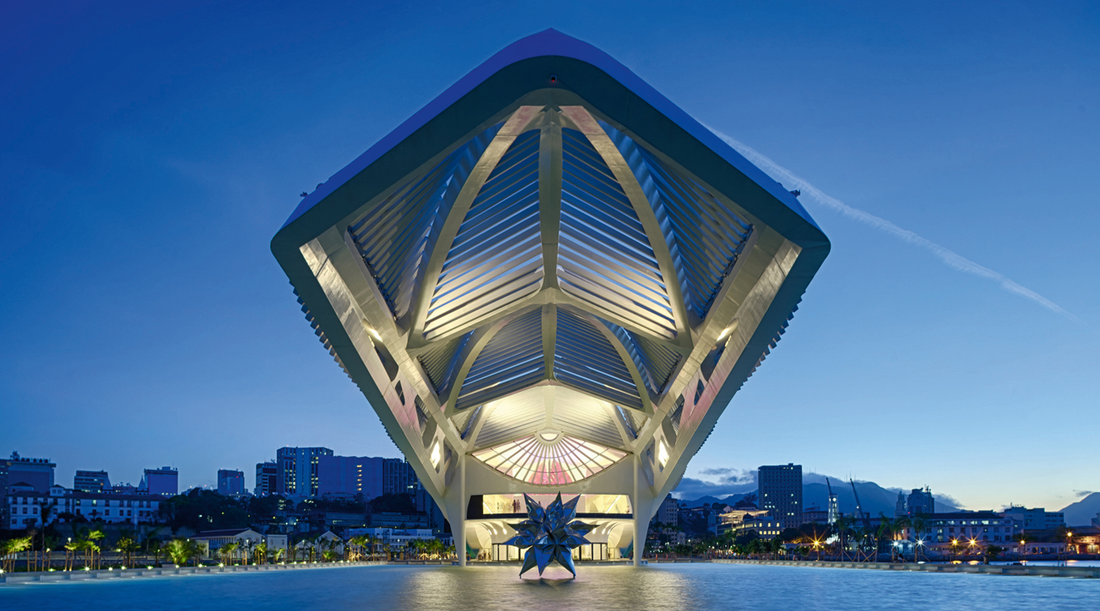
A building that almost floats above the sea, like a boat or a bird. Conceived as one of the architectural icons of Porto Maravilha, in Rio de Janeiro, the Museum of Tomorrow was created in perfect harmony with the landscape surrounding it. With its longitudinal shape, seemingly pointing towards the future, inspired by the bromeliads of Rio’s Botanical Garden, it was designed to make the São Bento Monastery, one of the most important Baroque complexes in the country, visibly stand out. Due to its characteristics, with its metal roof projecting 70 metres towards the square and 65 metres out towards the bay was, in fact, one of the biggest challenges of this complex project.
«A building that almost floats above the sea, like a boat or a bird.»
Covering almost 15,000 square metres, the Museum of Tomorrow is surrounded by water features, used to filter the water pumped in from the bay and returned from the end of the pier, a characteristic that makes it appear to visitors as though the museum is floating. In actual fact, this isn’t just another museum: its beauty and architectural distinction are matched by important sustainability guidelines, which have encouraged the discussion of topics such as the use of solar energy and new forms of modern architecture.

Using sustainable design, it incorporates natural energy and light sources. Water from Guanabara Bay is also used to regulate the temperature inside the building and the museum also makes use of photovoltaic solar panels, which can be adjusted to optimise the angle of the sun’s rays throughout the day and generate solar energy for the building.
The promenade surrounding the museum is an example of this, harnessing solar energy, which extends through the gardens and becomes a new park for the city. Native species have been planted here with the aim of emphasising the characteristics of the city’s coastal location, making it easier for the vegetation to adapt and attracting more of the region’s fauna, reinforcing the educational aspect of the garden. All in all, 26 different species have been planted over 5500 square metres.

But we still haven’t mentioned the name behind it, Santiago Calatrava. The Spanish architect considered one of the most important in today’s world, he was responsible for the revitalisation of the port of Buenos Aires and the City of Arts and Sciences in Valencia, among other projects of international importance. His style is described as neo-futurist, and this is clear to see in this project, not least because of the innovative use of materials. Calatrava spent several seasons in the city and recorded his entire creative process in more than 600 watercolours.
The visionary Museum of Tomorrow is focused on answering fundamental questions, such as where we come from, who we are and how we want to live together over the next fifty years. The museum’s exhibitions address issues such as population growth and increased life expectancy, consumption patterns, climate change, genetic engineering and bioethics, the distribution of wealth, technological advances and changes in biodiversity. Art, culture and sustainability in symbiosis in one unique project.